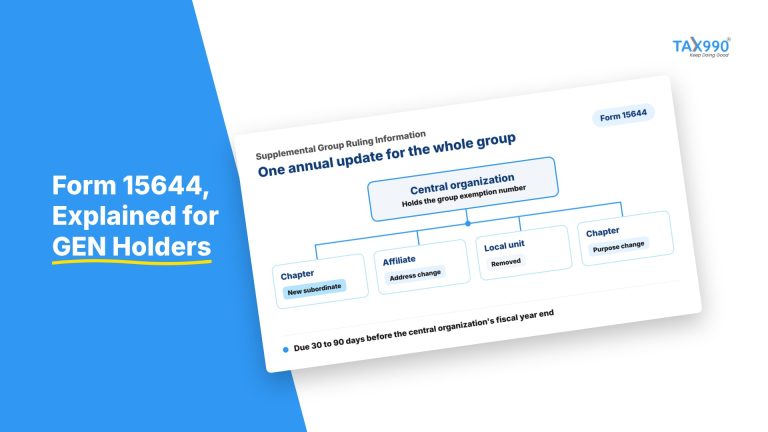
Form 15644 is the IRS form central organizations now use for their annual SGRI update. Here's when it's due, what it reports, and what else your group files.
Not every tax-exempt organization is a 501(c)(3) — here's how the IRS classifications differ, and why choosing the right one protects an organization's mission long after the application is filed.
If your organization falls outside 501(c)(3) and 501(c)(4), Form 1024 — not Form 1023 — is your path to IRS-recognized tax-exempt status. Here's what it covers and how to file.
Want me to adjust length, tone, or pull a different angle (e.g., leading with the determination letter's practical value for donors/funders rather than the form mechanics)?
Losing your 501(c)(3) status doesn't have to mean the end of your nonprofit — the IRS offers clear reinstatement pathways, whether your status was revoked last month or years ago.
Choosing between Form 1023 and 1023-EZ is one of the first and most important decisions your nonprofit will make. While both forms lead to 501(c)(3) status, they differ in complexity, eligibility, and long-term impact, making it essential to choose the one that best supports your organization's goals.
A public charity is a nonprofit that receives broad support from the general public, government agencies, or multiple donors.
A private foundation is usually funded and controlled by a single individual, family, or corporation.
Obtaining 501(c)(3) tax-exempt status is a crucial step for U.S. nonprofits, and this guide explains what it is, who qualifies, how to apply, and the compliance requirements involved.
Although nonprofits are tax-exempt, they must still meet IRS reporting requirements, and this brief guide explains when to collect a W-9, common mistakes to avoid, and how to stay compliant.
 Blog - Tax990