Tax990 makes filing your nonprofit's Form 990 simple with step-by-step guidance and built-in error checks — here's how to use it.Tax990 makes filing your nonprofit's Form 990 simple with step-by-step guidance and built-in error checks — here's how to use it.
The balance sheet section of Form 990 requires your organization to report assets, liabilities, and net assets at both the beginning and end of the tax year — and the IRS requires every figure to reconcile exactly.
Losing your 501(c)(3) status doesn't have to mean the end of your nonprofit — the IRS offers clear reinstatement pathways, whether your status was revoked last month or years ago.
A monthly administrative checklist covering finances, donor relations, compliance, and program tracking helps small nonprofits stay organized, compliant, and focused on their mission.
Starting early on your 2025 Form 990 filing helps nonprofits stay compliant, organized, and confident. This article outlines key preparation steps like gathering financial records, reviewing public support eligibility, and drafting program descriptions, so you can avoid last-minute issues and file accurately before the deadline.
The IRS has announced a significant filing extension for certain Form 990 filers, moving the deadline to February 2, 2026, for tax-exempt organizations impacted by recent natural disasters. This relief applies to nonprofits that were already operating under a valid extension for their 2024 returns and are located in designated disaster-affected states and counties. For eligible organizations, the added time can ease compliance pressures while they focus on recovery efforts without risking penalties or their tax-exempt status.
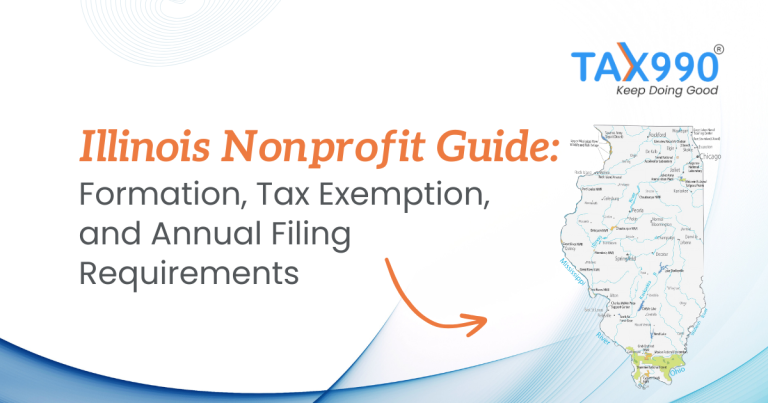
Nonprofit compliance is not one-size-fits-all. While federal tax exemption under Section 501(c)(3) is a major milestone, each state has its own unique set of requirements for registering and operating a...

 Blog - Tax990