Peer-to-Peer Fundraising for Nonprofits: Setup, Tools, and What Actually Works
Estimated reading time: 18 minute(s)
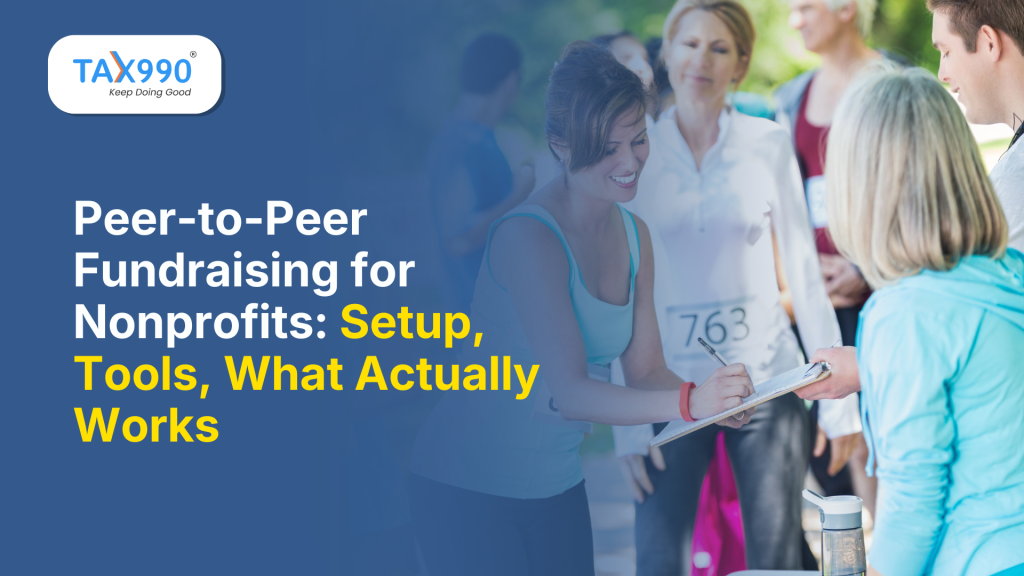
If your nonprofit has relied on the same annual gala and end-of-year appeal for the past decade, peer-to-peer fundraising can feel like a leap. It’s a leap worth taking because it lets your existing donors do something they’re often willing to do but rarely asked: recruit new ones on your behalf.
Done right, peer-to-peer (P2P) fundraising can expand your donor base, deepen supporter engagement, and generate revenue that doesn’t hinge entirely on your staff’s bandwidth. Done poorly, it fizzles into a campaign no one remembers launching.
What Is Peer-to-Peer Fundraising?
Peer-to-peer fundraising is a model in which your supporters create personal fundraising pages on behalf of your organization and solicit donations from their own networks.
Rather than a single donation page your staff promotes, you have dozens or hundreds of personal pages, each with a supporter’s own story, photo, and appeal. Your organization still collects the funds, processes tax receipts, and manages the campaign. But the outreach happens through people who already believe in your work.
This is what makes P2P fundamentally different from crowdfunding or a standard donation page. The fundraiser isn’t the organization; it’s a person.
Common formats include:
- Event-based campaigns – Participants in a walk, run, or ride solicit pledges before or during the event. Think: charity 5ks, polar plunges, endurance rides.
- Challenge or DIY campaigns – Supporters create their own fundraising challenge and ask their network to sponsor them.
- Tribute and honor campaigns – Donors fundraise in memory of a loved one or in celebration of a milestone, with gifts directed to a cause that was meaningful to the person being honored.
- Team campaigns – Groups build collective fundraising pages with individual number pages underneath.
Why Nonprofits Use It
Peer-to-peer fundraising extends your reach without proportionally increasing your staff time. A campaign with 50 active fundraisers is, in effect, 50 people sending appeals on your behalf to an audience you otherwise wouldn’t reach.
Beyond reach, P2P campaigns tend to attract new donors. Studies consistently show that the majority of donors who give through peer fundraising pages are first-time donors to that organization. That means you’re not just raising money, you’re building a pipeline.
There’s also a retention dimension. Supporters who fundraise on your behalf tend to give at higher rates in subsequent years than donors who give directly. Asking someone to fundraise for you deepens their investment in your mission.
That said, P2P isn’t the right fit for every nonprofit. It works best when you have an engaged community with a reason to participate. If your donor base is primarily major gift donors or institutional funders, the model may not translate well.
Setting Up a Peer-to-Peer Campaign
A successful peer-to-peer campaign starts before the first fundraising page goes live. The structure, messaging, participant experience, and follow-up plan all need to be clear enough for supporters to understand quickly and share confidently with their own networks.
Step 1: Define the Campaign Structure
Before you select a platform or design a page, answer a few foundational questions:
- What’s the hook? A P2P campaign needs a reason for supporters to participate beyond “we need money”. That might be a timed event, a matching gift opportunity, a specific program goal, or a personal challenge concept. The more concrete and compelling the hook, the easier it is for fundraisers to explain it to their networks.
- Who are your fundraisers? The most successful campaigns identify a core group of committed participants before launch. Recruit 10 to 20 enthusiastic fundraisers who will activate early and model what good fundraising looks like.
- What’s your goal, and how will you frame it? Set a campaign-level fundraising goal, but also give individual fundraisers a suggested personal goal. $500 per participant is often a reasonable default for first-time P2P campaigns, though the right number depends on your community.
- What’s the timeline? Campaigns with defined start and end dates outperform open-ended ones. Four to eight weeks is a common window; shorter creates urgency, longer allows momentum to build.
Step 2: Choose a Platform
Your platform is the infrastructure your fundraisers use to create pages, and where donors give. It needs to be easy for both groups. A confusing setup process will cause fundraisers to abandon ship before they’ve sent a single email. Reputable platforms include: Givebutter, GoFundMe Pro, Bloomerange, OneCause, Blackbaud, Donorbox, OneCause, and Zeffy.
Key features to look for:
- Simple page creation (ideally under 10 minutes for a fundraiser to set up)
- Mobile friendly donor experience
- Team and individual page options
- Fundraiser dashboard showing progress in real time
- Automated donor receipts and acknowledgement emails
- Integration with your CRM or donor database
Step 3: Build Your Campaign Assets
Your fundraisers need tools to succeed. Don’t launch a campaign and expect participants to figure out the messaging on their own. Prepare:
- A campaign toolkit
- A strong campaign page
- A sample fundraiser page
Step 4: Activate and Manage the Campaign
Once the campaign is live, your job shifts from setup to activation and momentum management.
The first week is critical. Send a direct, personal ask to your recruited fundraisers. A fundraiser who creates a page and never shares it is a missed opportunity. Early momentum is the strongest predictor of campaign success.
During the campaign, communicate regularly with your fundraiser group. Weekly updates showing leaderboards, milestones, and encouragement keep participants engaged. Celebrate publicly when a fundraiser hits their goal; it motivates others.
Reserve some of your matching gift or recognition incentives for mid-campaign use, not just the end. Campaigns often see a dip in the middle weeks; a mid-campaign match or fundraiser spotlight can revive momentum.
Get Started with P2P Fundraising
Peer-to-peer fundraising isn’t a shortcut. It requires upfront investment in campaign design, fundraiser recruitment, and active management during the campaign window. But for organizations with an engaged community and a clear hook, it’s one of the most cost-effective ways to expand both revenue and donor relationships.
The organizations that do P2P best treat it as a program, not a one-off event. They invest in their fundraisers, capture and use their data, and build on each campaign to improve the next one.
Interested in learning more about fundraising? Check out our checklist!
Leave a Comment