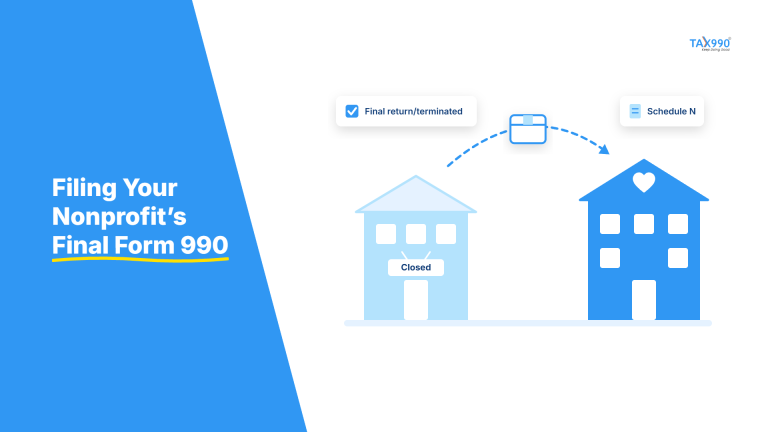
Dissolving or merging your nonprofit takes more than a board vote. Here's what the final Form 990 has to show, and why mistakes made at closing are hard to undo.
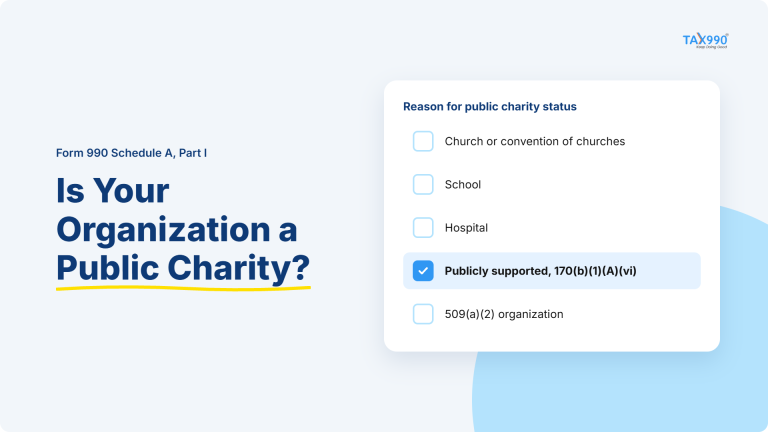
Every organization that applies for 501(c)(3) status starts out classified as a private foundation in the eyes of the IRS — a designation that comes with stricter rules, higher taxes, and less flexibility. Schedule A and the public support test are how your organization proves otherwise, demonstrating year after year that it's accountable to a broad public rather than a handful of funders. Here's how the test works, why one large gift won't disqualify you, and what's at stake if you fail it.
Your IRS determination letter proves your 501(c)(3) status to donors, grant makers, and state agencies — so a misspelled name, wrong EIN, or off effective date is worth fixing. Here's what each error can mean, and how to correct it.
Form 990-T rarely stands alone. Here's a plain-English breakdown of the five supplemental forms — 4562, 4797, 8949, 8995, and 3800 — that most often accompany it, and when each one applies.
Not every tax-exempt organization is a 501(c)(3) — here's how the IRS classifications differ, and why choosing the right one protects an organization's mission long after the application is filed.
Form 990-PF's Balance Sheet asks private foundations for a detailed look at assets, liabilities, and net assets — at both book and fair market value. Here's how Part II breaks down, line by line, and what determines which columns your foundation needs to complete.
If your organization falls outside 501(c)(3) and 501(c)(4), Form 1024 — not Form 1023 — is your path to IRS-recognized tax-exempt status. Here's what it covers and how to file.
Want me to adjust length, tone, or pull a different angle (e.g., leading with the determination letter's practical value for donors/funders rather than the form mechanics)?