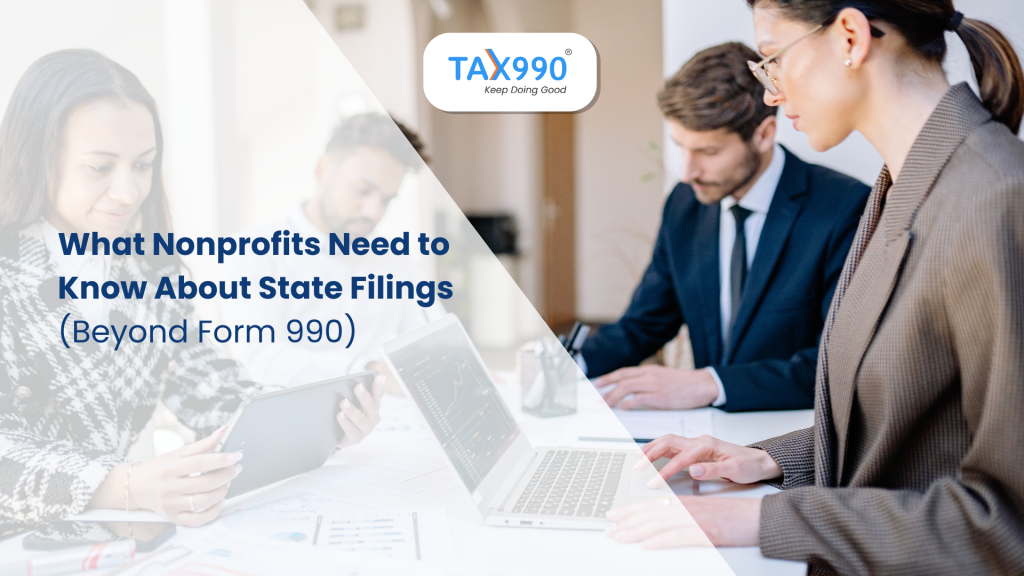
What Nonprofits Need to Know About State Filings (Beyond Form 990)
Estimated reading time: 12 minute(s)
When people think about nonprofit compliance, Form 990 usually takes center stage. Although Form 990 is the federal government’s primary tool for ensuring transparency and accountability, focusing only on federal filings is a common mistake.
State-level requirements are just as critical, and in many cases, more complex. Missing a state filing can lead to penalties, loss of good standing, or even the inability to operate or fundraise legally.
Why State Compliance Matters
Unlike federal requirements, which are relatively standardized, state regulations vary widely. Each state may impose its own rules for registration, annual reporting, charitable solicitation, or tax exemptions. This means a nonprofit operating in multiple states could be handling dozens of different deadlines and forms.
Ignoring these obligations can result in:
- Fines and late fees
- Revocation of charitable solicitation privileges
- Administrative dissolution
1. State Charitable Registration
Most states require nonprofits to register before soliciting donations. This applies not only to large organizations but also to smaller nonprofits. If your organization sends donation emails, runs online fundraising campaigns, and/or hosts events across state lines, you may trigger registration requirements in multiple states.
It is important to note:
- Registration is typically handled by the Attorney General or Secretary of State
- Initial registration often requires governing documents, IRS determination letters, and financial information
- Many states require annual renewals
2. State Tax Filings and Exemptions
Receiving federal tax-exempt status does not automatically grant state-level tax exemptions. Nonprofits may need to apply separately for:
- State income tax exemption
- Sales and use tax exemption
- Property tax exemption
For example, California requires a separate exemption application with the Franchise Tax Board, as a federal exemption is not automatically recognized.
3. Annual State Reports
In addition to charitable registration renewals, most nonprofits must file an annual report with the state of incorporation. This report usually includes current officer/director information, registered agent details, and confirmation of business address.
While it may seem routine, failing to file can lead to loss of good standing, which can affect your ability to open bank accounts, apply for grants, or enter into contracts.
For example, California, Washington D.C, and Iowa require annual or biennial reports.
4. Employment-Related Filings
If your nonprofit has employees, state compliance extends into labor and payroll requirements.
This can include:
- State payroll tax registration
- Unemployment insurance filings
- Workers’ compensation coverage
5. Multi-State Compliance Challenges
Operating in more than one state significantly increases complexity.
You may need to:
- Register as a foreign entity in additional states
- File multiple charitable solicitation registrations
- Track different renewal cycles
Common Mistakes to Avoid
Many compliance issues stem from common misunderstandings. One of the biggest is the belief that filing Form 990 fulfills all regulatory requirements, when it actually only covers federal obligations. Nonprofits also frequently miss that online fundraising can create registration requirements in multiple states, even if they operate from just one location. On top of that, varying state renewal schedules can make it easy to miss deadlines, leading to penalties or even loss of good standing.
How to Stay Compliant
To maintain compliance, nonprofits should:
- Identify every state where you solicit donations
- Creating a compliance calendar with all deadlines
- Keeping copies of governing documents and financials easily accessible
Final Thoughts
State filing requirements play an incredibly important role in keeping your nonprofit operational, credible, and legally protected. By understanding and proactively managing these obligations, your organization can focus less on administrative risk. Staying compliant isn’t just about meeting requirements–it’s about building trust with your donors and the communities you serve, while ensuring your organization operates effectively.
Leave a Comment