The Complete Guide to 501(c)(3) Tax-Exempt Status in 2026
Estimated reading time: 16 minute(s)
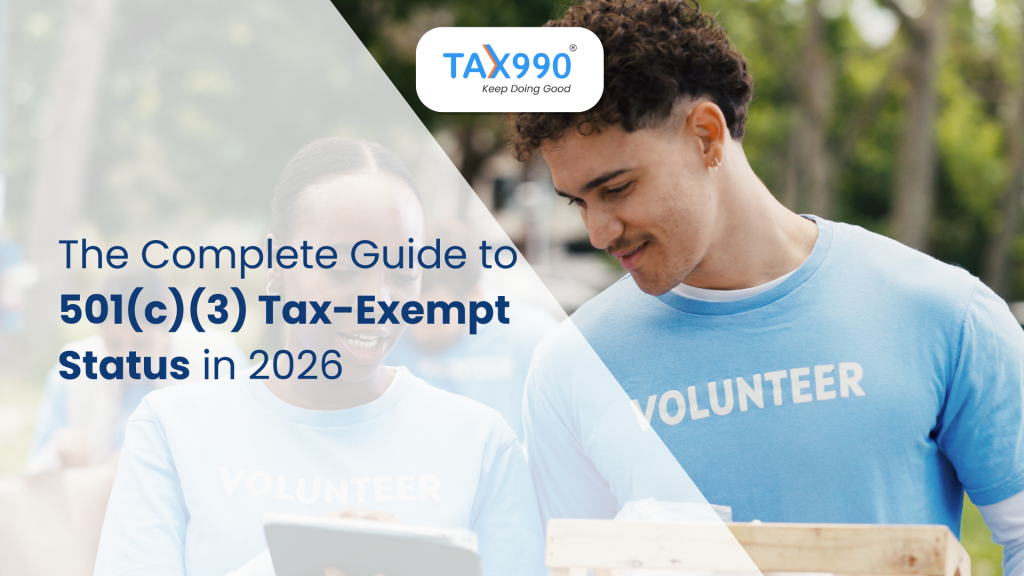
Starting and sustaining a nonprofit organization requires the right legal structure. For many charitable organizations in the United States, obtaining 501(c)(3) tax-exempt status is one of the most important steps toward legitimacy, sustainability, and growth.
This guide walks you through everything you need to know about 501(c)(3) status: what it is, who qualifies, how to apply, and compliance requirements.
Understanding Tax-Exempt Status
Tax-exempt status generally refers to organizations exempt from federal income tax under Internal Revenue Code Section 501(a), with the most common being 501(c)(3) charitable organizations. Other types include 501(c)(4) social welfare organizations, 501(c)(6) business leagues, and various civic or membership groups.
A key distinction between 501(c)(3) and other 501(c) organizations is that donations to 501(c)(3) organizations are tax-deductible for the donor, whereas donations to other organizations generally are not deductible.
What is 501(c)(3) Status?
Section 501(c)(3) of the Internal Revenue Code grants federal tax-exempt status to organizations that operate exclusively for:
- Charity
- Religion
- Education
- Science
- Literary
- Public safety testing
- Fostering amateur sports competition
- Preventing cruelty to children or animals
Organizations that qualify are exempt from paying federal income tax on activities related to their exempt purpose. Additionally, donations made to these organizations are typically tax-deductible for donors.
Why 501(c)(3) Status Matters in 2026
In today’s nonprofit landscape, 501(c)(3) status provides several key advantages:
- Federal income tax exemption: You are exempt from federal income tax on mission-related revenue.
- Tax-deductible donations: Donors can deduct contributions on their federal tax returns, making fundraising significantly easier.
- Grant eligibility: Many foundations, corporations, and government agencies only fund recognized 501(c)(3)organizations.
- State-level benefits: You may qualify for:
- State income tax exemption
- Sales tax exemption
- Property tax exemptions (varies by state)
- Credibility and public trust: IRS recognition increases transparency and donor confidence.
Types of 501(c)(3) Organizations
The two main categories of 501(c)(3) organizations include public charities and private foundations.
- Public charities receive broad public support and typically engage directly in charitable programs. Some examples of public charities include food banks, schools, and community foundations. Most new nonprofits apply as public charities.
- Private foundations primarily make grants to other charities and are usually funded by a single source (individual, family, or corporation).
For more information, visit here: Public Charities vs. Private Foundations
Eligibility Requirements to Obtain 501(c)(3) Status
To qualify, your organization must meet both organizational and operational tests.
| Organizational Test | Operational Test |
| Your organizing documents (Articles of Incorporation) must: Limit purposes to one or more exempt purposes Not allow activities outside those purposes Include a proper dissolution clause (assets must go to another 501(c)(3) upon closure) | Your organization must: Operate primarily for exempt purposesAvoid excessive private benefitAvoid serving private interests Not distribute profits to insiders |
Activities That Can Jeopardize 501(c)(3) Status
Political campaign activity (strictly prohibited)
You may not:
- Support or oppose political candidates
- Contribute to campaigns
- Endorse candidates publicly
Excessive lobbying (limited)
- You may engage in some lobbying, but it cannot be a “substantial part” of activities. Many nonprofits file the 501(h) election to define lobbying limits clearly.
Private inurement
- No profits or assets may benefit insiders (board members, founders, key employees).
Step-by-Step: How to Apply for 501(c)(3) Status in 2026
Step 1: Form a Legal Entity
Typically, you will:
- Incorporate as a nonprofit corporation at the state level
- Draft Articles of Incorporation with IRS-required language
- Create bylaws
Step 2: Obtain an EIN
Apply for an Employer Identification Number (EIN) from the IRS (free and required).
Step 3: Determine Which IRS Form to File
Form 1023-EZ (Streamlined Application)
- For smaller organizations
- Must meet eligibility requirements
- Gross receipts projected under $50,000 annually
- Assets under $250,000
Form 1023
- Required for larger or more complex organizations
- More detailed narrative and financial disclosures
- Higher filing fee
As of 2026, both applications are submitted electronically via Pay.gov.
Step 4: Pay the User Fee
Fees vary depending on the form selected and are paid at submission.
Step 5: Respond to IRS Follow-Ups (If Any)
The IRS may request additional clarification before approval.
Step 6: Receive Determination Letter
If approved, you’ll receive an official IRS determination letter confirming tax-exempt status.
Approval times vary depending on application complexity, IRS workload, and whether additional information is requested. Form 1023-EZ applications are generally processed faster than full Form 1023 submissions.
Important note: In addition to getting federal 501(c)(3) status, most states require charitable solicitation registration through the Secretary of State or Attorney General before asking for donations, along with annual renewals, state incorporation, and potential state tax exemptions.
Key Takeaways
Securing 501(c)(3) tax-exempt status in 2026 remains one of the most important steps a charitable organization can take. While the application process requires careful preparation and ongoing compliance, the long-term benefits, like tax exemption, funding eligibility, and donor trust, make it worthwhile for many nonprofit organizations.

Leave a Comment