- Posted inin Nonprofits
What to Do When the IRS Rejects Your Nonprofit’s Return for Information It Already Has
- Posted byPatience Booker
- 0 Comments
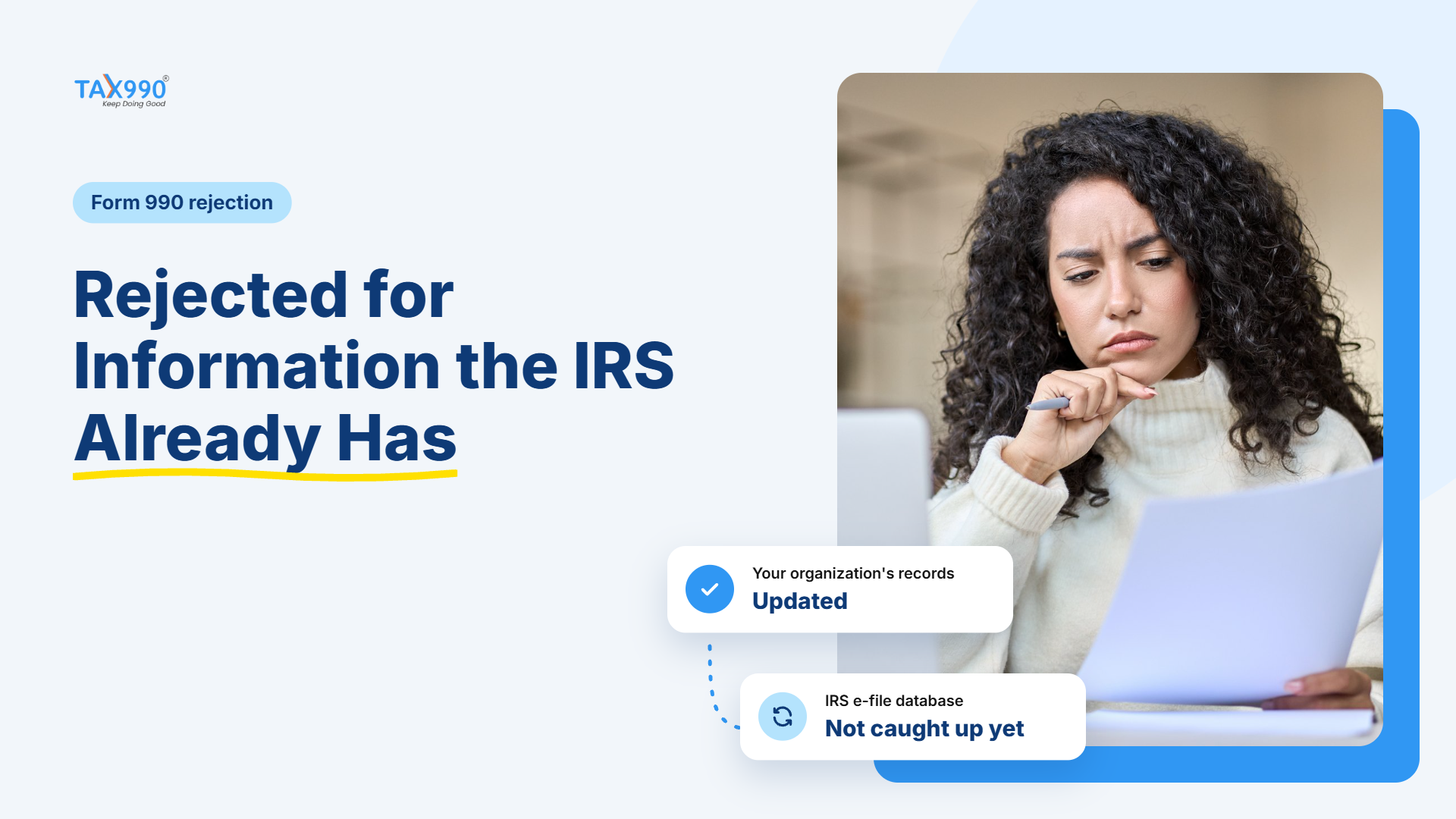
The IRS e-file database update letter is a written request asking the IRS to correct its e-file records when they’ve fallen out of sync with information your organization already reported. It fixes one specific, frustrating problem: your Form 990 keeps getting rejected for a mismatch you already corrected.
Picture it. Your Form 990 is ready. You e-file it, and a few days later it comes back rejected. The error points to a mismatch: your filing requirement, address, or officer information doesn’t match what the IRS has on record.
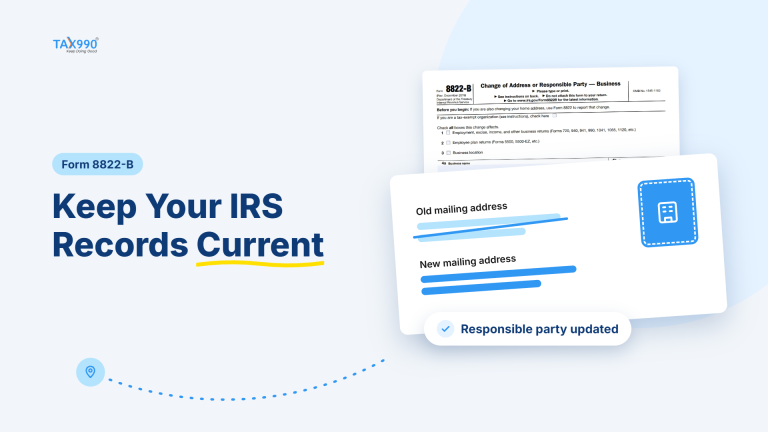
The strange part is that you already fixed it. Maybe you filed Form 8822-B months ago, or called the IRS directly. You did the work, and the IRS e-file system still hasn’t caught up.
What Does the Letter Do?
This isn’t a numbered IRS form. It’s a letter your organization sends explaining what happened and asking the IRS to update its records, so your returns go through cleanly.
It’s often the right response to a rejection like F990-902-01, which flags that your EIN isn’t showing as an established exempt filer in the IRS e-file database, or a similar rejection tied to your filing requirement, address, or officer information.
The IRS addresses this issue on its guidance page about updating return type information to avoid rejects. A mismatch between your return and the IRS e-file records is a known, fixable problem, not something unique to your organization.
Should You Send This Letter or File Form 8822-B?
This letter has one job: correcting an IRS record that’s still wrong after you’ve already tried to fix it. It isn’t a first step.
| Your situation | What to do |
| Your address or responsible party changed, and you haven’t told the IRS yet | File Form 8822-B first |
| You already reported the change, and your return is still rejecting for the same mismatch | Send the e-file database update letter |
If the IRS doesn’t know about the change, tell them with Form 8822-B. If the IRS knows and its e-file system hasn’t updated, this letter asks it to catch up.
Does the IRS Fix Its E-file Database on Its Own?
No. Reporting a change, through Form 8822-B or any other way, doesn’t always sync with the e-file system. That’s why a separate written request is sometimes the only way to clear a rejection that keeps coming back.
What Goes Into the Letter?
The IRS needs enough detail to find your return, see the rejection, and know what to correct. That means your organization’s identifying information, the tax year, the rejection you received, supporting documentation, and an officer’s signature. It also has to go to the right IRS office, by fax or mail.
Getting those details right on the first try matters, because processing can take up to 45 days. Your free Tax990 account includes a guided letter template that tells you exactly what to include and where to send it. Fill it out, then download, print, sign, and send.
What Happens While You Wait?
Many organizations retransmit their return instead of waiting out the full 45 days. There’s no rule against trying again while the letter is in process. When you e-file with Tax990, retransmissions are included at no extra cost under the Tax990 Commitment, so a rejection like this doesn’t add a bill to an already frustrating week.
If your rejection names exemption type mismatch error F990T-045, see Organization Exemption Type Mismatch (F990T-045): How to Resolve It for that specific fix.
Quick Answers
Is this an official IRS form? No. It’s a letter template, not a numbered form.
Can I e-file this letter? No. You fill it out in your Tax990 account, then download, print, and send it by fax or mail.
Is the template free? Yes. It’s included with a free Tax990 account, with no charge to fill out or download.
Recent Posts
- What to Do When the IRS Rejects Your Nonprofit’s Return for Information It Already Has
- Form 8822-B: Why Keeping Your Nonprofit’s IRS Information Current Matters
- Fiscal Sponsorship vs. Starting a Nonprofit: Form 990 Rules
- Form 843 for Nonprofits: How to Request a Tax Refund or Penalty Abatement
- Nonprofit vs. Not-for-Profit vs. For-Profit: What the Difference Means for Your Taxes